

Michael Jordan, Golf Betting and Poker: The Documented History of His Gambling
Michael Jordan’s six NBA championships established him as one of basketball’s greatest athletes, but his competitive interests extended beyond the court. Private poker games, substantial golf wagers and visits to casinos became subjects of public discussion during the 1990s. Contemporary newspaper reports, court testimony and subsequent interviews provide a factual basis for understanding this controversial aspect of his biography.
Michael Jordan’s Interest in Poker and Card Games
Card games formed part of Jordan’s recreational activities during his professional basketball career. Unlike his sporting achievements, however, his poker results were never recorded systematically. Most available information comes from interviews, personal accounts and reports concerning private gambling sessions rather than professional poker tournaments.
In the 1990s, when Jordan regularly participated in private card games, poker was predominantly played in traditional casinos, private clubs and informal gatherings among friends. By 2026, the gambling landscape has changed considerably. Online casino websites, including limit casino (NolimitWay), offer digital alternatives to traditional card games, with different betting limits and game formats. While the social setting and accessibility have evolved, the fundamental principles of poker, including strategic decision-making and financial risk, remain unchanged.
One of the clearest records of Jordan’s involvement in gambling emerged in October 1992. During the trial of James Bouler, the basketball player testified about a $57,000 cheque connected to gambling debts. Contemporary reporting by United Press International identified golf and poker as activities associated with that payment.
What The Last Dance Revealed About Jordan’s Gambling
The 2020 documentary series The Last Dance renewed public interest in Jordan’s activities away from basketball. Archival footage and interviews illustrated his willingness to compete over money, including relatively informal wagers involving people around the Chicago Bulls. These episodes demonstrated how competition extended into his everyday recreational activities.
Jordan characterised his behaviour as an extension of his competitive personality rather than acknowledging a gambling problem. His explanation provided a personal perspective on the controversy, although competitive motivation alone does not eliminate the financial risks associated with gambling.
Nor does the documentary establish Jordan as a professional poker player. There is insufficient public evidence to reconstruct his preferred poker variants, regular stakes, tournament record or overall card-playing profits. His participation in private games should therefore be distinguished from the activities of professional poker players.
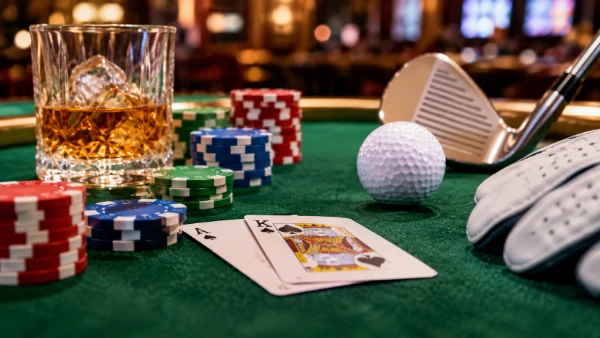
Golf Wagers and the Richard Esquinas Controversy
Golf generated some of the most widely reported allegations surrounding Jordan’s gambling. In 1993, San Diego businessman Richard Esquinas published Michael & Me: Our Gambling Addiction … My Cry for Help!, describing substantial private wagers made during their golf matches.
Esquinas claimed that Jordan’s outstanding gambling debt had reached approximately $1.25 million in 1991. Jordan disputed the reported scale of the wagers, although he publicly acknowledged a negotiated settlement of $300,000. The distinction between the alleged original debt and the agreed settlement remains important.
These accounts attracted considerable attention because Jordan was still an active NBA player. His financial resources allowed him to participate in wagers far beyond ordinary recreational budgets. Nevertheless, conflicting accounts and the private nature of these transactions make it impossible to calculate his total gambling losses accurately.
NBA Investigations and the Retirement Controversy
In March 1992, the NBA announced that its examination of Jordan’s gambling activities had found no grounds for disciplinary action. Commissioner David Stern nevertheless expressed concern about certain personal associations and their potential consequences for the league’s reputation.
Following further scrutiny in 1993, the NBA concluded another investigation in October without identifying a violation of league rules. Jordan had announced his first retirement on 6 October 1993, explaining that he no longer possessed the motivation required to continue playing professional basketball.
The proximity of these events encouraged speculation about a concealed gambling-related suspension. As of 2026, that theory remains unsupported by credible public evidence. Jordan’s acknowledged wagers, disputed gambling debts and the NBA’s investigation findings represent documented elements of his biography, whereas allegations of a secret disciplinary arrangement remain unsubstantiated.