
Michael Jordan and the Washington Wizards: How a Final Comeback Reshaped the Perception of Ageing NBA Stars
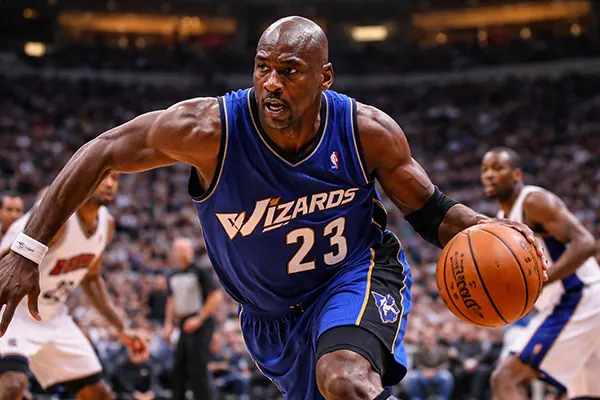
When Michael Jordan returned to the NBA in 2001 with the Washington Wizards, the move was initially seen as a nostalgic chapter rather than a competitive one. At 38 years old, long removed from his Chicago Bulls dominance, expectations were mixed. Yet this final comeback did more than extend his career—it fundamentally altered how players, teams, and fans evaluate ageing superstars in professional basketball.
The Context of Jordan’s Return in 2001
After retiring for the second time in 1998, Jordan stepped away from the court at the peak of his legacy. His transition into a front-office role with the Wizards suggested a permanent shift away from playing. However, by 2001, the competitive drive that defined his career resurfaced, leading to a decision that surprised the entire league.
The NBA landscape had changed significantly during his absence. Younger stars like Kobe Bryant and Allen Iverson were redefining the game, while teams were becoming faster and more perimeter-oriented. Jordan’s return was not just about proving himself—it was about testing whether a player from a previous era could still compete at a high level.
Importantly, Jordan joined a struggling Wizards team that had missed the playoffs repeatedly. This was not a carefully constructed contender but a rebuilding squad. His decision to return under these circumstances demonstrated a willingness to take risks, shifting the narrative from legacy protection to genuine competition.
Performance vs Expectations: Statistical Reality
Despite concerns about his age, Jordan delivered performances that exceeded realistic expectations. During the 2001–02 season, he averaged over 22 points per game, leading the team in scoring and proving he could still be an offensive focal point. These numbers were particularly notable given the physical demands of the modern NBA at the time.
His second season with the Wizards in 2002–03 showed slight statistical decline, but he still maintained averages around 20 points per game. This consistency highlighted his ability to adapt his playing style, relying less on athleticism and more on positioning, footwork, and basketball intelligence.
However, the team did not reach the playoffs during his tenure. This outcome influenced how his comeback was judged, shifting the focus from team success to individual resilience. It introduced a new framework for evaluating veteran players beyond championship results alone.
Changing the Narrative Around Ageing Players
Before Jordan’s Wizards years, ageing stars were often expected to retire before visible decline. The league culture placed heavy emphasis on leaving at the right moment, preserving reputation rather than extending careers into uncertain territory. Jordan challenged this unwritten rule directly.
His return demonstrated that veteran players could still contribute meaningfully, even if they were no longer dominant. The idea that a player could transition into a different role—mentor, scorer, or stabilising presence—gained wider acceptance following his example.
This shift became increasingly visible in later years, as players extended their careers into their late 30s and even 40s. Jordan’s Wizards stint helped normalise longevity as a strategic advantage rather than a liability, influencing how franchises manage veteran contracts and roster construction.
Influence on Future Generations
Players such as LeBron James, Chris Paul, and Vince Carter have benefited from a league environment more open to long careers. Jordan’s example showed that physical decline does not necessarily eliminate competitiveness, encouraging players to invest more in conditioning and recovery.
Modern sports science has amplified this trend, but the psychological barrier had to be broken first. Jordan’s willingness to compete at an advanced age played a role in shifting player mindsets, making longevity an achievable goal rather than an exception.
Additionally, teams began to value experience differently. Veteran leadership became an asset in rebuilding teams, with older players guiding younger rosters. Jordan’s presence in Washington illustrated how influence extends beyond statistics, shaping team culture and professionalism.
Legacy Impact: Risk, Criticism, and Reassessment
Jordan’s Wizards period was not without criticism. Some analysts argued that his return diluted the perfection of his Chicago legacy, particularly because it lacked playoff success. The narrative of an undefeated Finals record remained intact, but his overall career arc became more complex.
Over time, however, this perspective has evolved. Rather than weakening his legacy, the Wizards years are increasingly seen as evidence of his competitive nature. Returning without a guaranteed path to success required a different kind of confidence—one not reliant on dominance.
This reassessment reflects broader changes in how sports careers are evaluated. Longevity, adaptability, and resilience now carry more weight in legacy discussions. Jordan’s final chapter contributed to this expanded view, showing that greatness can include imperfection.
Modern Perspective on Veteran Superstars
In 2026, the NBA features multiple players performing at elite levels well into their late 30s. This trend is often linked to advances in training, nutrition, and analytics, but cultural acceptance plays an equally important role. Jordan’s Wizards stint helped lay that foundation.
Teams today are more strategic in managing minutes and workloads, allowing older players to remain effective. The concept of “load management” reflects a long-term approach that was less common during Jordan’s era but aligns with the longevity mindset he helped legitimise.
Ultimately, Jordan’s final comeback stands as a turning point. It reframed ageing not as decline alone, but as a stage requiring adaptation. For modern NBA stars, this shift has opened the door to extended careers, redefining what it means to remain competitive at the highest level.