
Michael Jordan After Basketball: How 23XI Racing Extends His Competitive Legacy
When Michael Jordan stepped away from professional basketball, the assumption was that his competitive chapter had already been written in full. In reality, his approach to performance, leadership and long-term ambition simply shifted arenas. The launch of 23XI Racing in NASCAR reflects a deliberate move into a different kind of competition, one rooted in strategy, engineering and team management. By 2026, the team has evolved from a high-profile debut project into a structured racing organisation with measurable results, illustrating how Jordan’s mindset continues to shape outcomes far beyond the basketball court.
The Origins of 23XI Racing and Strategic Entry into NASCAR
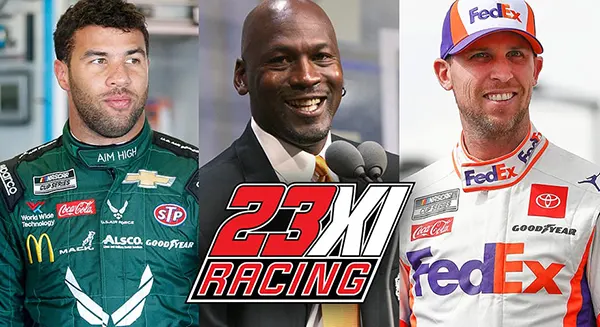
23XI Racing was founded in 2020 as a partnership between Michael Jordan and NASCAR driver Denny Hamlin. The decision was not случайным or purely symbolic. Jordan had long followed motorsport and saw NASCAR as a space where brand influence, data-driven decision-making and team culture could intersect effectively. The number “23” connects directly to his basketball identity, while “XI” represents Hamlin’s racing number, creating a deliberate bridge between two competitive worlds.
The team made its official debut in the 2021 NASCAR Cup Series with Bubba Wallace as its first driver. This move carried both sporting and cultural significance. Wallace was already a recognised figure in NASCAR, and the partnership helped position the team not only as a competitor on the track but also as a participant in broader conversations around diversity and representation in American motorsport.
From the beginning, 23XI Racing invested in infrastructure rather than relying solely on branding. The team established technical partnerships, secured Toyota as a manufacturer, and worked closely with Joe Gibbs Racing to ensure access to high-level engineering expertise. This foundation allowed the organisation to compete more seriously than typical expansion teams in their early seasons.
Building a Competitive Foundation in a Technical Sport
Unlike basketball, where individual performance can often dominate outcomes, NASCAR requires precise coordination between drivers, engineers, pit crews and strategists. Jordan’s involvement has therefore been less about visibility and more about building systems that deliver consistency. This includes investing in simulation tools, aerodynamic development and race analytics.
By 2023 and 2024, 23XI Racing expanded its driver lineup, adding Tyler Reddick, a proven race winner with strong road course performance. This move demonstrated a shift from development to competitive ambition. The team began to secure regular top-ten finishes and playoff appearances, marking a transition from новичка to устойчивого участника чемпионата.
Operational discipline became one of the defining traits of the organisation. Jordan’s influence is visible in how performance metrics are tracked, how decisions are evaluated after each race, and how long-term improvements are prioritised over short-term publicity. This mirrors the structured environments he thrived in during his NBA career.
Michael Jordan’s Leadership Style in a Motorsport Context
Jordan’s leadership approach within 23XI Racing reflects a blend of high expectations and calculated delegation. He is not involved in day-to-day technical decisions, yet his presence shapes the culture of accountability. Team members are expected to perform at a level consistent with elite sport, regardless of their role.
One of the notable differences between basketball and NASCAR lies in feedback cycles. In racing, results depend on multiple variables, including weather, mechanical reliability and race incidents. Jordan’s experience with pressure situations allows him to maintain a long-term perspective, focusing on process rather than reacting impulsively to individual outcomes.
He also emphasises the importance of mental resilience. Drivers and crew members operate in high-risk environments where split-second decisions matter. The ability to recover from setbacks, analyse mistakes and return with improved performance is treated as a core competency within the team.
Translating Competitive Instinct into Organisational Culture
Jordan’s competitive instinct is often associated with personal drive, but within 23XI Racing it manifests as a collective standard. The team operates with clearly defined goals for each season, including performance benchmarks, consistency targets and technical development milestones.
Communication plays a central role. Post-race debriefs are structured and data-focused, ensuring that each decision can be traced back to measurable factors. This approach reduces ambiguity and supports continuous improvement, which is essential in a sport where margins are extremely small.
Another key element is trust in specialists. Jordan recognises that success in NASCAR depends on expertise across multiple domains. By empowering engineers, strategists and crew chiefs, he ensures that decisions are informed by those with direct technical knowledge, while still maintaining overall strategic direction.
Performance Growth and Position in NASCAR by 2026
By 2026, 23XI Racing has established itself as a competitive mid-to-top-tier team within the NASCAR Cup Series. The organisation has secured multiple race wins, consistent playoff appearances and improved qualifying performance. These results are not случайными; they reflect steady investment and refinement of both personnel and technology.
The introduction of the Next Gen car in NASCAR reshaped the competitive landscape, placing greater emphasis on engineering efficiency and adaptability. 23XI Racing adapted effectively to these changes, leveraging its technical partnerships and internal development processes to remain competitive across different track types.
Sponsorship and commercial partnerships have also evolved. The team collaborates with major brands, but these relationships are structured around long-term alignment rather than short-term exposure. This stability allows for sustained investment in performance rather than constant restructuring.
Future Outlook and Long-Term Competitive Vision
Looking ahead, 23XI Racing is positioned to continue its upward trajectory. The focus remains on expanding technical capabilities, improving pit crew performance and refining race strategies. There is also potential for further expansion of the driver lineup, depending on market opportunities and performance needs.
Jordan’s long-term vision appears to centre on sustainability rather than rapid expansion. Instead of pursuing immediate dominance, the team is building a foundation that can support consistent competitiveness over multiple seasons. This approach aligns with how successful NASCAR organisations operate historically.
In broader terms, 23XI Racing represents a continuation of Jordan’s legacy in a different discipline. The same principles that defined his basketball career—preparation, discipline and refusal to accept mediocrity—are now embedded in a motorsport environment. By 2026, this project stands as a practical example of how elite competitive thinking can translate across industries.