
The Most Important Michael Jordan Games The Last Dance Didn’t Show
The Last Dance did what it set out to do: it captured the tension, ego, and exhaustion of the 1997–98 Chicago Bulls, then stitched in enough flashbacks to explain why that season mattered. But the series was never meant to be a full career biography. It was shaped around a single year of access, a limited number of episodes, and an editorial choice to keep the story moving. As a result, some of Michael Jordan’s most revealing matches—especially from the 1980s and certain Finals turning points—either appear only as quick references or remain entirely off-screen. This piece focuses on those missing games and why they still matter in 2026.
Early career games that proved Jordan was already “that” player
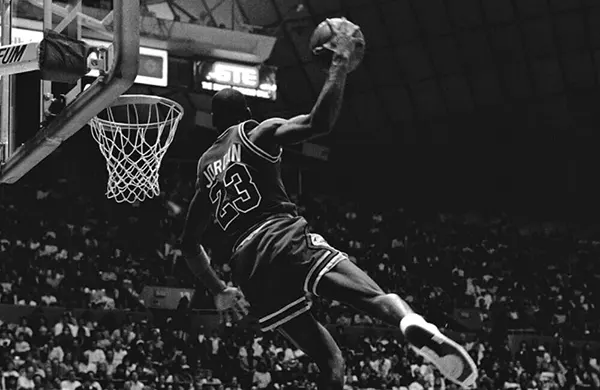
If you want one night that explains Jordan’s ceiling before Chicago were contenders, it’s Game 2 of the 1986 first-round series in Boston: 63 points against the Celtics in a double-overtime loss. The headline number is famous, but the context is even sharper. The Bulls were overmatched, the venue was brutal, and Jordan still produced a scoring performance that forced the league’s best defence to react possession by possession. In terms of play-off scoring records, that 63-point game remains one of the clearest early proofs of concept for his entire career.
The key detail people forget is how that game shifted perception. Chicago lost the match and the series, but the event became a public “receipt” that the new superstar could drag a limited roster into a heavyweight fight. Boston were stacked, yet the post-game conversation centred on the visitor in red. The Last Dance references Jordan’s rise, but it doesn’t stay with this moment long enough to show how quickly the league began treating him as an inevitability rather than a prospect.
It also matters because it frames the Jordan story in the right order. The championships came later; the proof of concept came first. In 1986, there was no dynasty to protect, no legacy management, no “we know how this ends”. There was only a young player in a hostile arena, solving possessions in real time. That kind of greatness—less polished, more desperate—helps explain why the Bulls’ later confidence wasn’t fictional.
The 1989 “Shot” and why it’s more than a buzzer-beater clip
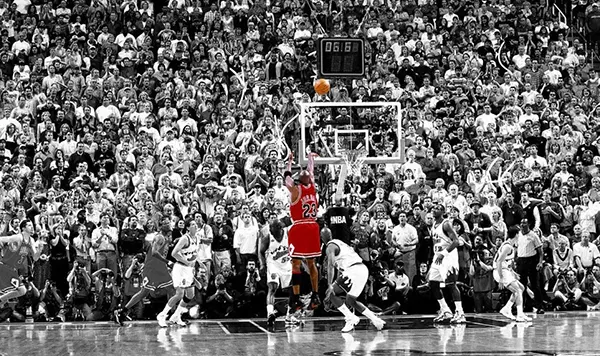
The Shot—Jordan’s game-winner over Cleveland in Game 5 of the 1989 first round—gets replayed so often that it risks becoming a clip without meaning. But the specifics matter: May 7, 1989, series tied 2–2, Cavaliers up one with seconds left, then the jump shot at the horn to win 101–100. It wasn’t a comfortable win in a later round; it was a knife-edge first-round escape that kept Chicago alive.
What makes it “missing” in spirit is that The Last Dance tends to treat Jordan’s clutch moments as signposts on the way to the 1990s. This one deserves to be studied on its own, because it shows the early version of Jordan under maximum pressure without the safety net of future titles. The play comes after a final minute with multiple lead changes, which is exactly when role players tighten up and superstars get hunted. Jordan didn’t just take the shot; he took the entire moment.
It also lands differently when you remember what followed: the Bulls advanced, then eventually ran into Detroit again. In other words, The Shot didn’t end the story; it extended the conflict. As a piece of the larger arc—Chicago learning how to survive close games before they learned how to dominate series—it remains one of the cleanest examples you can point to.
Play-off moments from the 80s that shaped the Bulls’ identity
The Last Dance is strongest when it shows how grudges, slights, and losses became fuel. That theme began well before the 1990s, especially in the yearly collisions with the Pistons. What’s often missing on screen is the granular reality: not just “Detroit were physical”, but how Chicago repeatedly found themselves late in games needing a single clean possession—one stop, one good entry, one calm decision—against a defence built to deny Jordan’s preferred angles.
Those late-series possessions created two things the documentary sometimes skips over: the Bulls’ tactical maturity and Jordan’s willingness to evolve. Early Jordan could win you a game with a scoring burst; later Jordan could win you a series by trusting movement, accepting contact, and letting the triangle produce the right look. The difference is visible in the 1989–1990 period, where Chicago were learning to survive the league’s most organised brutality without turning every trip into a solo act.
Even without pinning everything to one famous shot, the 80s play-offs are packed with the kind of “quiet legend” moments that don’t always fit a ten-episode structure: a mid-fourth-quarter stretch where Jordan becomes a decoy so a teammate can shoot in rhythm; a possession where he posts earlier than usual to force a double-team; a defensive gamble at exactly the right time. These aren’t highlights; they are habits, and they explain why the later Bulls felt inevitable.
Why those 80s stories were likely trimmed from the series
There’s a practical reason: The Last Dance is anchored in the 1997–98 season and built from a huge archive of that year’s footage. That framing naturally prioritises material that supports the season’s narrative drive rather than a full career inventory. When you only have a limited number of episodes, earlier eras tend to become compressed into short “bridges” between bigger turning points.
There’s also storytelling discipline. If you fully explore the Pistons wars of the late 80s—game-to-game adjustments, repeated heartbreak, the emotional fatigue—it becomes a different series. The show chose to sketch that period so it could keep the main spine tight: the final run, the contracts, the internal politics, and the countdown energy of a last attempt.
Finally, some truths are less cinematic than the legend. The late 80s include injuries, roster gaps, losing seasons, and half-finished systems. They’re vital for understanding Jordan, but they can slow the pace of a documentary that needs to land emotional beats at predictable intervals. The omission isn’t evidence that those matches weren’t important; it’s evidence that the series had a clear editorial lane.
Under-discussed Finals nights that changed legacies without changing the ring count
The 1990s Finals are often reduced to ring totals and iconic images. Yet even within championship series, there are nights that shaped how opponents defended Jordan and how Jordan solved Finals basketball. A prime example is Game 4 of the 1993 Finals against Phoenix, when he scored 55 points as Chicago won 111–105 to take a 3–1 lead. That performance remains his highest-scoring Finals game and arrived in a series defined by elite shot-making and thin margins.
What’s easy to miss is how that performance functioned as a tactical statement. Phoenix had size, scoring, and the league MVP in Charles Barkley, and the series was not a formality. A 55-point Finals night isn’t just “Jordan being Jordan”; it forces a defence to decide which principle it’s willing to break—help off shooters, send early doubles, or live with single coverage and hope fatigue does the job. That choice changes the remaining games, even if the later summaries look straightforward.
It’s also a reminder that Jordan’s dominance wasn’t limited to last-shot theatre. Sometimes the defining act was repetition: the same mid-post touch, the same footwork, the same calm response when the defence finally guessed right. Those are the games that teach you how greatness sustains itself across four quarters, not just in the final five seconds.
Why certain Finals stories rarely get full treatment
First, Finals narratives are crowded. In a documentary built around a single “last season” spine, you can either slow down for deep tactical breakdowns or use Finals footage as punctuation marks in a larger character story. The series mostly chose the second option, because the emotional centre was 1997–98, not a season-by-season Finals syllabus.
Second, some Finals truths complicate a clean hero narrative. The 1993 series, for example, isn’t only about Jordan scoring; it’s also about Phoenix pushing Chicago, about role players swinging moments, and about how small decisions—match-ups, foul trouble, defensive coverages—shape outcomes. When a show keeps Jordan as the primary lens, it often compresses stories where the most interesting lesson is collective rather than individual.
Finally, there’s a media effect: the more an image is replayed, the less people feel the need to revisit the full match. Certain Finals nights suffer the same fate—reduced to a stat line or a clip. In 2026, a useful rewatch is to treat those games as their own events with their own stakes, not as footnotes attached to a ring count.